Showing posts with label coal. Show all posts

Thursday, 6 October 2016

It is hypocritical to block us from using coal-fired power- Nigeria's Finance Minister tells western governments

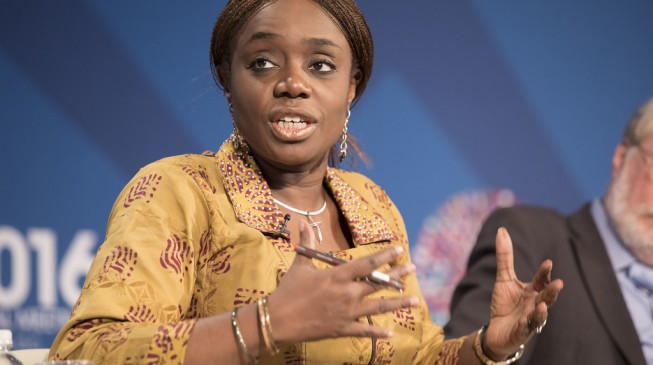
Minister of Finance, Mrs Kemi Adeosun yesterday described as hypocritical efforts by the western government to stop Nigeria from using coal-fired power to power their industries when in fact it is the same coal-fired power system that has helped countries like Britain achieve the kind of industrialization it has now.
Speaking at the International Monetary Fund (IMF) discourse on infrastructure in Africa ‎at the George Washington University USA, Adeosun frowned at the recent blockage of a coal project to Nigeria by some Western powers.
“The case, if you look at the numbers of business cases in Africa, is quite a huge one. Yes, we do need macroeconomic stability. We also do need consistency of policies by the multilateral institutions and western countries. Let me give you an example. In Nigeria, we have coal and it doesn’t take a genius to work out what it will take to get coal-fired power. Yet, we are being blocked. I think there is some hypocrisy in that. We have an entire western industrialization that was built on coal-fired energy and that is the competitive advantage that has been used to develop Britain, where I grew up. Now, Africa wants to do it and they saying it’s not green, we can’t do and that we should go and do solar, wind, which are the most expensive power projects. The West cannot say that after polluting the atmosphere for 100 years, and when Africa wants to explore its resources, they say no. If we want to stop coal, those who started it over 200 years ago, should first stop using coal before telling us to stop”‎she said

Friday, 24 June 2016

Nigeria looks to coal,solar and biomass to achieve national energy security

The Minister of Power, Works and Housing, Mr. Babatunde Fashola, has said that the Federal Government is increasingly looking to alternative sources such as coal, solar and biomass for power generation in a bid to achieve national energy security.
He said the 700-megawatts Zungeru hydropower project would soon be completed, adding that construction of the 3,000MW Mambilla hydropower plant would commence shortly.
Fashola, who spoke at an annual lecture organised by the Nigerian Institute of Electrical and Electrics Engineers in Lagos on Thursday, noted that the nation had over the years relied heavily on natural gas for power generation.
The nation’s power generation and supply have dropped significantly in recent months on the back of the resurgence of militant attacks on oil and gas facilities in the Niger Delta.
Fashola said, “Our vulnerability to gas has become apparent to the development that we are seeing. And so, one of the things that the energy mix will do is not just taking power plants closer to fuel sources, but to also help in achieving national energy security. So, we are going beyond solar to coal and to a lot of hydro.
“We will soon finish hydro power plants like Zungeru and start the biggest hydro power project, the Mambilla, which will give us in one place about 3,000 megawatts. We are finalising the procurement now.
“We will use biomass because there is a sugar processing plant and sugarcane plantation somewhere in Adamawa, and we are talking to the proprietors to see how we can use some of that also for producing energy.”
Beyond power generation, the minister said it was important to engage electricity consumers on the demand side management, also known as energy conservation.
The minister added, “Beyond all of this generation of power, what is important is the demand side management, which we have come here to talk about, which is energy conservation. There is capacity to conserve between 1,000MW and 2,000MW by actions that all of us should take in our homes, in our offices, the way we build, the way we use energy.
“We have seen that air-conditioning and kitchen equipment constitute the largest consumer of power. So, how we build our houses, how we use less of air-conditioning, how we air our homes using nature, more wind, working with our architects, how we shape and situate the angle of our house so that we conserve less energy, how we use less water by being efficient in conserving water to transfer energy to cost.”

Latest News

Stock Markets News